
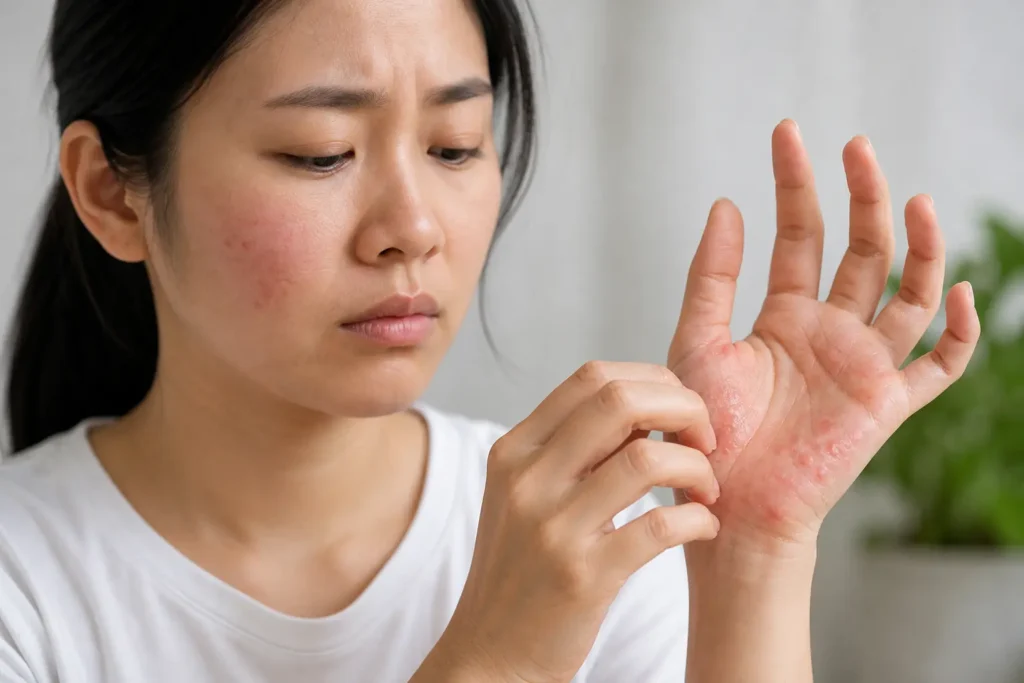
Dyshidrotic eczema is a specific type of eczema that causes clusters of tiny, intensely itchy blisters on the palms, sides of the fingers, and soles of the feet. It is one of the most common forms of hand eczema in Malaysia, where heat, sweat, and humidity create the ideal conditions for flares. If you have been dealing with recurring blisters and cracking skin on your hands or feet, this guide covers everything you need to know about dyshidrotic eczema, what triggers it, and how to manage it effectively.
What Is Dyshidrotic Eczema?
Dyshidrotic eczema is a form of eczema that causes clusters of small, fluid-filled blisters to develop on the palms of your hands, the sides of your fingers, and sometimes the soles of your feet. The condition is also known as pompholyx eczema, acute palmoplantar eczema, or cheiropompholyx when it affects only the hands.
If you have noticed intensely itchy blisters on your palms that seem to appear suddenly, especially during hot weather or periods of stress, you may be experiencing dyshidrotic eczema. This guide is written for Malaysian adults who want to understand their symptoms, identify their triggers, and find effective, gentle ways to manage flares.
According to the American Academy of Dermatology, dyshidrotic eczema accounts for approximately 5 to 20% of all hand eczema cases. It is twice as common in women as in men and most frequently affects adults between the ages of 20 and 40.
Symptoms: What Dyshidrotic Eczema Looks Like
The hallmark symptom of dyshidrotic eczema is the sudden appearance of small, deep-set blisters. These blisters are typically 1 to 2 millimetres in diameter and feel firm, unlike the soft blisters you might get from a burn. They tend to appear in clusters rather than individually.
Common symptoms include:
- Intensely itchy or burning skin before and during blister formation
- Small, translucent blisters on the palms, sides of fingers, or soles of feet
- Skin that becomes red, cracked, or scaly as blisters dry out over 2 to 4 weeks
- Thickened, discoloured skin in areas of repeated flares
- Pain or tenderness if blisters become large or merge together
In mild cases, a dyshidrotic eczema flare looks like tiny water bubbles just under the skin’s surface. In severe cases, the blisters can merge into larger bullae (blisters wider than 5 mm), cause significant swelling, and make everyday tasks like gripping objects or typing painful.
Common Causes and Triggers in Malaysia
Dyshidrotic eczema does not have a single cause. It results from a combination of genetic susceptibility and environmental triggers. In Malaysia, several local factors make flares more likely.
Genetic and Immune Factors
People with a personal or family history of atopic dermatitis, hay fever, or allergic asthma are at significantly higher risk. Research published in the Journal of Investigative Dermatology found that filaggrin gene mutations, which impair the skin barrier, are strongly associated with all forms of eczema including pompholyx.
Malaysia-Specific Triggers
Heat and sweat. Malaysia’s year-round heat and humidity mean the hands are frequently exposed to sweat and moisture, both of which are established dyshidrotic eczema triggers. Sweat draws irritants closer to the skin and softens the skin barrier, increasing permeability.
Dust mite exposure. A study published in Clinical and Experimental Allergy found that dust mite sensitisation is present in over 85% of Malaysian homes at levels that exceed the sensitisation threshold. Dust mite allergens are a documented trigger for multiple forms of eczema, including dyshidrotic eczema.
Nickel and metal contact. Nickel is one of the most common contact allergens in dyshidrotic eczema. Everyday sources include jewellery, belt buckles, mobile phone casings, and certain foods such as whole grains, legumes, and chocolate.
Psychological stress. Stress is consistently reported as a trigger. The stress-itch-scratch cycle activates immune pathways that drive inflammation, causing flares or worsening existing ones.
Frequent hand washing or exposure to detergents. Soap, cleaning products, and hand sanitisers strip natural skin lipids and disrupt the skin’s acid mantle. People who wash their hands more than 10 times per day are at elevated risk.
How Dyshidrotic Eczema Is Diagnosed
There is no specific blood test or biopsy that confirms dyshidrotic eczema. Diagnosis is clinical, meaning a dermatologist or general practitioner assesses your symptoms, their location, and your history. Your doctor will examine the distribution and appearance of blisters, ask about your personal and family history of atopic conditions, screen for contact allergy if nickel exposure is suspected, and rule out fungal infections such as tinea manuum, which can mimic dyshidrotic eczema on the hands.
Treatment Options for Dyshidrotic Eczema
1. Topical Corticosteroids
Moderate to potent topical corticosteroids are the first-line medical treatment for dyshidrotic eczema flares. They reduce inflammation and speed blister resolution, typically applied once or twice daily for 1 to 2 weeks under a doctor’s supervision.
2. Cold Compresses
Applying a cool, damp cloth to affected areas for 15 minutes several times a day can relieve itch, reduce inflammation, and help dry out blisters during the acute phase. Do not burst blisters, as this increases infection risk.
3. Antihistamines
Oral antihistamines can reduce the itching sensation and help with sleep during flares. They provide symptomatic relief but do not treat the underlying inflammation.
4. Phototherapy
For chronic or severe dyshidrotic eczema that does not respond to topical treatments, narrowband UVB phototherapy or PUVA therapy is an evidence-based option administered in a dermatology clinic over several weeks.
Gentle Daily Skincare for Dyshidrotic Eczema
Regardless of the treatment approach, daily skincare is the foundation of long-term management. The goal is to restore and maintain the skin barrier between flares, reducing both the frequency and severity of future episodes.
Step 1: Cleanse Gently
Use a soap-free, pH-balanced cleanser. Conventional soaps have a pH of 9 to 11, which disrupts the skin’s natural acid mantle (pH 4.5 to 6.5) and weakens the barrier with every wash. Look for cleansers that are free from SLS, parabens, and synthetic fragrance.
Step 2: Moisturise Immediately After Washing
Apply moisturiser within 3 minutes of washing to lock in hydration before the skin dries out completely. Apply generously and pay particular attention to the fingers, between the fingers, and the palms.
Step 3: Choose a Moisturiser That Supports the Skin Barrier
For dyshidrotic eczema and eczema-prone skin, look for moisturisers containing ceramides, niacinamide (clinically shown to increase ceramide production by up to 34%), goat milk (natural pH 6.4 to 6.8, rich in lactic acid and fatty acids that replenish barrier lipids), and panthenol (provitamin B5) which supports wound healing and relieves dryness and itch.
The Yagishi Premium Goat’s Milk Body Lotion combines 19%+ pure goat milk, niacinamide, panthenol, ceramides, grapeseed oil, and aloe vera in a formula free from SLS, parabens, mineral oil, and alcohol. It is hypoallergenic and rated 4.82 out of 5 from verified Malaysian customers managing eczema-prone and sensitive skin.
Step 4: Protect Your Hands
Wear cotton-lined gloves when doing housework, washing dishes, or handling cleaning products. Remove rings before washing hands to avoid moisture trapping. Avoid rubber or latex gloves directly on the skin, as these can worsen contact dermatitis.
When to See a Doctor
See a doctor if blisters are large, painful, or spreading rapidly; the affected skin shows signs of bacterial infection such as increased redness, warmth, yellow crusting, or pus; flares are occurring more than 4 times per year; over-the-counter treatments have not improved symptoms within 2 weeks; or the condition is affecting your ability to work or perform daily activities.
Frequently Asked Questions
Is dyshidrotic eczema contagious?
No. Dyshidrotic eczema is an inflammatory skin condition driven by immune and genetic factors. It cannot be spread through touch, contact with blisters, or shared items. The blisters are filled with serous fluid, not an infectious agent.
How long does a dyshidrotic eczema flare last?
Most flares resolve within 2 to 4 weeks when managed correctly. Without treatment or trigger management, flares can persist longer or recur frequently. Individuals with chronic dyshidrotic eczema may experience near-continuous cycles of blistering and healing.
What is the best moisturiser for dyshidrotic eczema in Malaysia?
Look for a fragrance-free, SLS-free moisturiser with barrier-supporting ingredients such as ceramides, niacinamide, and goat milk. Apply immediately after washing, before skin dries completely. The Yagishi Goat’s Milk Body Lotion is formulated specifically for eczema-prone and sensitive skin in Malaysia’s climate.
Can stress alone cause dyshidrotic eczema?
Stress is a significant trigger but rarely acts alone. It typically exacerbates underlying genetic susceptibility or combines with another trigger such as heat, sweat, or allergen exposure to precipitate a flare. Managing stress through sleep, exercise, and relaxation techniques can reduce flare frequency.
Is dyshidrotic eczema the same as pompholyx?
Yes. Pompholyx is the older term for the same condition. When blistering occurs only on the hands it is sometimes called cheiropompholyx. When it affects only the feet it is called pedopompholyx. Dyshidrotic eczema is the term most commonly used in current clinical literature.
Conclusion
Dyshidrotic eczema is a manageable condition. Most people experience significant improvement with consistent skincare, trigger avoidance, and appropriate treatment during flares. The foundation of long-term management is a gentle daily routine: washing with a pH-balanced, soap-free cleanser and immediately following with a barrier-supportive moisturiser containing ceramides, niacinamide, and goat milk.
If you are managing eczema-prone skin in Malaysia’s heat and humidity, choosing products formulated for sensitive and eczema-prone skin makes a meaningful difference. Explore the Yagishi Premium Goat’s Milk Body Lotion, formulated with 19% pure goat milk and clinically active ingredients.