
Key Takeaways
This guide is for Malaysian adults who are living with eczema and want clear, actionable answers. Whether you have been diagnosed for years or are only now connecting your persistent skin flares to atopic dermatitis, this article covers what eczema is, why Malaysia’s climate makes it harder to manage, and exactly which skincare ingredients work to repair and protect your skin barrier.
Eczema in Malaysia is under-discussed despite being widespread. The Malaysian Dermatological Society estimates that atopic dermatitis affects between 10 and 20% of the adult population, making it one of the most common chronic skin conditions in the country. Yet the majority of sufferers continue using skincare products with ingredients that actively worsen their condition.
The good news: eczema is highly manageable with the right routine and the right ingredients. This guide tells you exactly what to do.
- Eczema affects an estimated 10 to 20% of adults in Malaysia, with humidity and heat acting as primary local triggers.
- Adult eczema is a chronic condition driven by a damaged skin barrier and an overactive immune response, not a hygiene issue.
- Ceramides, glycerin, shea butter, colloidal oatmeal, and niacinamide are the five most clinically supported ingredients for managing eczema.
- The right body wash and lotion combination is the highest-leverage daily habit for reducing flare-up frequency.
- Yagishi Body Wash and Yagishi Body Lotion are formulated with skin barrier-supporting ingredients, suitable for eczema-prone adults. Available at yagishi.my.
Table of Contents
- What Is Adult Eczema?
- Why Eczema Is Especially Challenging in Malaysia
- Symptoms of Eczema in Adults
- Common Eczema Triggers for Malaysian Adults
- The Best Skincare Ingredients for Eczema (and How Each One Works)
- How Yagishi Body Wash and Body Lotion Support Eczema-Prone Skin
- Daily Skincare Routine for Adult Eczema in Malaysia
- Ingredients and Products to Avoid
- When to See a Dermatologist
- FAQ: Adult Eczema in Malaysia
What Is Adult Eczema?
Adult eczema, clinically known as atopic dermatitis, is a chronic inflammatory skin condition characterised by dry, itchy, and inflamed skin. It is not a single disease but a spectrum condition, ranging from mild dryness to severe, widespread inflammation that disrupts sleep and daily function. The underlying mechanism involves two simultaneous failures: a compromised skin barrier that cannot retain moisture or block irritants, and an overactive immune system that responds to minor triggers with disproportionate inflammation. These two failures feed each other in a cycle. A weakened barrier lets in allergens and microbes. The immune response to those intrusions further damages the barrier. Scratching worsens both. Adult eczema differs from childhood eczema in its distribution pattern. In adults, it most commonly appears on the neck, upper chest, inner elbows, backs of knees, hands, and eyelids. Many adults with eczema had childhood atopic dermatitis that never fully resolved. Others develop it for the first time in adulthood, often triggered by occupational exposures, stress, or hormonal changes. According to the Journal of the American Academy of Dermatology, adult-onset atopic dermatitis accounts for approximately 1 in 4 adult eczema cases, meaning it is not exclusively a condition carried over from childhood.Why Eczema Is Especially Challenging in Malaysia
Malaysia’s tropical climate creates a specific set of challenges for eczema management that temperate-country skincare advice does not adequately address. Understanding these local factors is essential to building an effective routine.Heat and Humidity
Malaysia’s average temperature sits between 27 and 32 degrees Celsius year-round, with humidity levels consistently above 80%. Sweating is near-constant. Sweat contains salt, urea, and lactic acid. On intact skin, these compounds are harmless. On eczema-prone skin with a compromised barrier, they act as direct irritants, triggering the itch-scratch cycle within minutes of exposure.Air-Conditioning Overuse
The response to heat is heavy reliance on air-conditioning in offices, malls, and homes. Air-conditioned environments reduce humidity to 40 to 50%, which rapidly dehydrates already dry, eczema-prone skin. The cycle of sweating outdoors and drying out indoors creates repeated barrier stress throughout the day.Dust Mites
Malaysia’s warm, humid conditions create an ideal environment for house dust mites, one of the most significant eczema allergens. A study published in Allergy found that over 85% of Malaysian homes had dust mite allergen levels exceeding sensitisation thresholds. For adults with eczema and concurrent dust mite allergy, bedding and upholstered furniture become constant flare-up drivers.Water Quality
Hard water, which contains elevated levels of calcium and magnesium ions, is present in many parts of Malaysia. Research from King’s College London found that hard water exposure increases skin permeability and eczema severity by interacting with sodium lauryl sulphate (SLS) in cleansers, amplifying its barrier-disrupting effect.Symptoms of Eczema in Adults
Adult eczema presents differently from the textbook childhood picture. Recognising adult-specific patterns helps with early intervention.- Persistent dryness that does not resolve with standard moisturisers
- Intense itching, often worst at night or after temperature changes
- Thickened, leathery skin (lichenification) from chronic scratching in areas like neck, inner elbows, and behind knees
- Red, inflamed patches on the face, neck, upper chest, or hands
- Small fluid-filled blisters (vesicles), particularly on hands and feet, in a subtype called dyshidrotic eczema
- Skin that weeps or crusts during active flare-ups
- Hyperpigmentation or hypopigmentation after flares resolve, more visible in darker skin tones common in Malaysia
- Skin infections from Staphylococcus aureus, which colonises eczema skin at significantly higher rates than healthy skin
Note on skin tone: In Malaysian adults with brown or darker skin, eczema often presents as grey, purple, or dark brown patches rather than red. This frequently leads to misdiagnosis or late diagnosis. If your skin is persistently rough, itchy, and thickened regardless of colour presentation, consult a dermatologist.
Common Eczema Triggers for Malaysian Adults
Triggers are not causes. Eczema is caused by genetic and immune factors. Triggers are the specific inputs that push skin from stable to inflamed. Identifying your personal triggers is one of the most effective management strategies available.Environmental Triggers
- Sweat accumulation from heat exposure, exercise, or humid conditions
- Dust mites in mattresses, pillows, carpets, and upholstered furniture
- Air pollution, particularly PM2.5 particulates from haze events common in peninsular Malaysia
- Mould spores, elevated in humid Malaysian environments
- Synthetic fabrics such as polyester and nylon that trap heat and sweat
Skincare and Product Triggers
- Fragranced soaps, body washes, and detergents
- Products containing sodium lauryl sulphate (SLS) or sodium laureth sulphate (SLES)
- Alcohol-based toners and hand sanitisers used at high frequency
- Nickel-containing jewellery or metal accessories in contact with skin
Internal Triggers
- Stress increases cortisol, which suppresses the skin barrier repair response
- Hormonal changes around menstrual cycles, pregnancy, or perimenopause
- Certain foods in individuals with confirmed food allergies (not universal)
- Sleep deprivation impairs skin regeneration and barrier function
Trigger Tracking Tip: Keep a 2-week log noting what you ate, products used, activities, stress level, and sleep duration alongside any flare-ups. Most adults identify 2 to 3 consistent personal triggers within 14 days of systematic tracking. This is more actionable than eliminating all possible triggers at once.
The Best Skincare Ingredients for Eczema (and How Each One Works)
Not all moisturising ingredients work the same way. For eczema management, the most effective approach combines three types of agents working together: humectants that draw water into the skin, emollients that soften and smooth, and occlusives that seal moisture in. The ingredients below are the most clinically supported for eczema-prone skin.1. Ceramides: The Most Important Ingredient for Eczema
Ceramides are lipid molecules that naturally make up approximately 50% of the outermost skin layer (stratum corneum). They act as the “mortar” between skin cells, forming a barrier that retains moisture and blocks irritants, allergens, and bacteria. Research published in the Journal of Investigative Dermatology confirmed that people with atopic dermatitis have significantly reduced ceramide levels, particularly ceramides 1 and 3, compared to healthy skin. This ceramide deficiency is not a symptom of eczema. It is one of the primary structural causes of the leaky skin barrier that makes eczema skin so vulnerable. Topical ceramide application has been shown in multiple clinical studies to:- Restore barrier integrity measurably within 2 to 4 weeks of consistent use
- Reduce transepidermal water loss (TEWL) by up to 42% in atopic dermatitis patients
- Decrease itch severity scores in adults with mild to moderate eczema
- Reduce the frequency and severity of flare-ups when used as part of a daily maintenance routine
2. Glycerin (Glycerol): The Workhorse Humectant
Glycerin is a humectant that draws water from the deeper dermis and from the environment into the stratum corneum. It is one of the most extensively studied skincare ingredients in existence. A 2016 meta-analysis in the British Journal of Dermatology found that glycerin significantly improved skin hydration, softness, and barrier function in patients with atopic dermatitis. Importantly, glycerin also accelerates the synthesis of new ceramides in the skin, making it synergistic with ceramide-containing products. Used together, glycerin and ceramides produce better barrier outcomes than either ingredient alone.3. Shea Butter: Anti-Inflammatory Emollient
Shea butter contains a high concentration of triterpenes, plant-derived compounds with proven anti-inflammatory properties. In eczema-prone skin, this anti-inflammatory action complements ceramide barrier repair by reducing the underlying inflammation that perpetuates the itch-scratch cycle. Shea butter is also rich in oleic acid and stearic acid, fatty acids that closely mimic the skin’s natural lipid composition. This structural similarity allows it to integrate into the skin barrier more effectively than most synthetic emollients. Clinical studies have shown that unrefined shea butter reduces symptoms of atopic dermatitis comparable to hydrocortisone 1% in mild cases.4. Colloidal Oatmeal: Clinically Proven Anti-Itch Agent
Colloidal oatmeal (finely milled oat grain) was granted FDA recognition as a skin protectant in 2003 specifically for use in eczema and atopic dermatitis. Its active compounds, primarily avenanthramides, have dual action: they inhibit pro-inflammatory cytokine production and physically soothe irritated nerve endings to reduce itch perception. A randomised controlled trial published in the Journal of Drugs in Dermatology found that a colloidal oatmeal-containing moisturiser reduced eczema severity by 32% over 6 weeks compared to a standard moisturiser, with statistically significant improvements in itch, dryness, and rash area. For Malaysian adults dealing with persistent itch worsened by heat, colloidal oatmeal provides targeted relief without pharmaceutical intervention.5. Niacinamide: Barrier Reinforcement and Pigmentation Control
Niacinamide (vitamin B3) supports eczema-prone skin through two distinct mechanisms. First, it stimulates ceramide synthesis in keratinocytes, directly augmenting barrier function. Second, it reduces post-inflammatory hyperpigmentation, which is a significant concern for Malaysian adults with darker skin tones where eczema flares consistently leave dark marks. Studies show that 2 to 5% niacinamide applied twice daily increases ceramide production by up to 34% over 8 weeks, making it a meaningful complement to topical ceramide products rather than a standalone solution.Ingredient Efficacy Summary
| Ingredient | Type | Primary Action | Key Benefit for Eczema |
|---|---|---|---|
| Ceramides | Barrier lipid | Repairs skin barrier structure | Reduces TEWL by up to 42% |
| Glycerin | Humectant | Draws moisture into skin | Boosts ceramide synthesis |
| Shea Butter | Emollient | Softens and reduces inflammation | Anti-inflammatory via triterpenes |
| Colloidal Oatmeal | Skin protectant | Soothes itch and inflammation | 32% severity reduction in 6 weeks |
| Niacinamide | Vitamin B3 | Stimulates ceramide production | Reduces post-flare pigmentation |
How Yagishi Body Wash and Body Lotion Support Eczema-Prone Skin
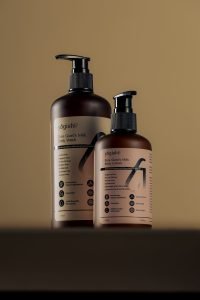 Most body care products in Malaysian pharmacies and supermarkets are formulated for normal skin. They use surfactants that strip the skin barrier, fragrances that trigger contact sensitisation, and preservatives that worsen inflammation in atopic skin. For adults with eczema, using these products is not neutral. It actively works against barrier repair.
Yagishi Body Wash takes the opposite approach. It is formulated to cleanse the skin without disrupting its pH balance or stripping its natural lipid content. For eczema management in Malaysia’s climate, this matters at every shower. When the skin is exposed daily to sweat, pollution, and humidity, it needs to be cleansed. But cleansing with the wrong product removes the very barrier components that eczema skin needs most. Yagishi Body Wash cleans without that tradeoff.
Critically, it avoids the key barrier-disrupting ingredients that standard cleansers rely on: no harsh sulphate surfactants, no synthetic fragrance, no alcohol. In hard water conditions common to many Malaysian urban areas, the absence of SLS is particularly important. Research from King’s College London identified SLS as a compound that dramatically increases skin permeability and irritation in hard water, a combination that eczema-prone skin cannot withstand.
Yagishi Body Lotion is where the skin barrier repair happens. Applied immediately after bathing, it delivers the moisture and lipid support that eczema skin cannot generate on its own. The formulation is designed for sensitive, compromised skin: nourishing, non-irritating, and designed for the daily repeated application that effective eczema management requires.
For Malaysian adults managing eczema in heat and humidity, the two-product combination addresses the full cycle: Yagishi Body Wash for clean skin without barrier disruption, then Yagishi Body Lotion within the critical 3-minute post-bath window to lock moisture in and begin barrier repair.
Most body care products in Malaysian pharmacies and supermarkets are formulated for normal skin. They use surfactants that strip the skin barrier, fragrances that trigger contact sensitisation, and preservatives that worsen inflammation in atopic skin. For adults with eczema, using these products is not neutral. It actively works against barrier repair.
Yagishi Body Wash takes the opposite approach. It is formulated to cleanse the skin without disrupting its pH balance or stripping its natural lipid content. For eczema management in Malaysia’s climate, this matters at every shower. When the skin is exposed daily to sweat, pollution, and humidity, it needs to be cleansed. But cleansing with the wrong product removes the very barrier components that eczema skin needs most. Yagishi Body Wash cleans without that tradeoff.
Critically, it avoids the key barrier-disrupting ingredients that standard cleansers rely on: no harsh sulphate surfactants, no synthetic fragrance, no alcohol. In hard water conditions common to many Malaysian urban areas, the absence of SLS is particularly important. Research from King’s College London identified SLS as a compound that dramatically increases skin permeability and irritation in hard water, a combination that eczema-prone skin cannot withstand.
Yagishi Body Lotion is where the skin barrier repair happens. Applied immediately after bathing, it delivers the moisture and lipid support that eczema skin cannot generate on its own. The formulation is designed for sensitive, compromised skin: nourishing, non-irritating, and designed for the daily repeated application that effective eczema management requires.
For Malaysian adults managing eczema in heat and humidity, the two-product combination addresses the full cycle: Yagishi Body Wash for clean skin without barrier disruption, then Yagishi Body Lotion within the critical 3-minute post-bath window to lock moisture in and begin barrier repair.
Formulated for sensitive, eczema-prone skin.
Yagishi Body Wash + Yagishi Body Lotion: the daily routine built around skin barrier science.
Free from synthetic fragrance. Free from harsh surfactants. Made for skin that needs more.
Shop Yagishi at yagishi.my →Daily Skincare Routine for Adult Eczema in Malaysia
The single most impactful thing you can do for eczema is establish and maintain a consistent daily skincare routine. Consistency matters more than any individual product. The following routine is structured for Malaysian conditions.Morning Routine
- Rinse with cool or lukewarm water only. You showered the night before. A morning rinse is sufficient. Avoid hot water entirely.
- Pat dry immediately with a soft cotton towel. Do not rub.
- Apply moisturiser within 3 minutes of patting dry. This is the soak-and-seal method. Do not let skin air-dry first.
- If prescribed topical treatments: Apply to affected areas before your moisturiser.
- Dress in 100% cotton or moisture-wicking fabric. Avoid polyester and tight-fitting synthetic garments in Malaysia’s heat.
Evening Bath or Shower
- Water temperature: lukewarm. Hot water above 37 degrees Celsius strips ceramides and free fatty acids from the skin surface.
- Duration: 5 to 10 minutes maximum. Extended soaking degrades barrier lipids.
- Use Yagishi Body Wash on areas that genuinely need cleansing: armpits, groin, feet, and any skin folds with sweat accumulation. Rinse the rest with water only.
- Pat dry gently. Never rub active eczema patches.
- Apply Yagishi Body Lotion within 3 minutes to the entire body, not only affected areas. Preventive application to non-affected skin reduces barrier thinning over time.
- Apply prescribed topical corticosteroids or immunomodulators to active flares if indicated, then reapply lotion on top.
Malaysian-Specific Add-Ons
- Post-exercise shower: If you exercise in the evening, shower immediately after to remove sweat before it sits on the skin barrier. Repeat the Yagishi Body Wash and lotion steps.
- After prolonged AC exposure: Reapply Yagishi Body Lotion to particularly dry areas (hands, forearms, neck) after extended air-conditioned office or mall environments.
- Bedding: Wash bedsheets at 60 degrees Celsius weekly to reduce dust mite load. Use cotton pillow covers changed at least twice per week.
Ingredients and Products to Avoid
| Ingredient / Factor | Why It Worsens Eczema |
|---|---|
| Synthetic fragrance / parfum | Leading contact allergen in adults. Can contain 10 to 300 individual chemicals under one label declaration. |
| Sodium lauryl sulphate (SLS) | Proven barrier disruptor. Amplified by hard water. Standard industry reference irritant in patch testing. |
| Denatured alcohol (SD alcohol, alcohol denat.) | Strips natural moisturising factors and sebum. Leaves skin more permeable to irritants. |
| Methylisothiazolinone (MI/MCI) | Preservative and documented skin sensitiser. Banned at current concentrations in EU rinse-off products for good reason. |
| Essential oils (tea tree, lavender, eucalyptus) | Natural does not mean safe for eczema. Multiple essential oils are contact allergens. Tea tree oil is a particularly common trigger in Malaysian adults using “natural” skincare. |
| Antibacterial soap (triclosan) | Disrupts skin microbiome. Eczema-prone skin already has an altered microbiome dominated by S. aureus; further disruption worsens colonisation risk. |
When to See a Dermatologist
Consistent daily care with the right products manages the majority of mild to moderate adult eczema effectively. However, seek professional medical advice when:- Signs of infection are present: yellow crusting, honey-coloured scabs, warm and painful skin, weeping lesions, or fever alongside a flare. Infected eczema commonly involves Staphylococcus aureus and requires antibiotic treatment, either topical or oral.
- Eczema is covering large body surface areas (more than 10% of total skin) or spreading rapidly despite consistent routine.
- Sleep is chronically disrupted by itching. Sleep deprivation impairs skin repair and creates a vicious cycle that home management cannot break without pharmaceutical intervention.
- No meaningful improvement after 4 weeks of a consistent, appropriate skincare routine.
- Potent topical steroids are needed more than twice per month. This suggests inadequate baseline maintenance rather than appropriate acute treatment.
- Work or quality of life is significantly affected. Occupational eczema (common in healthcare workers, food handlers, hairdressers, and construction workers in Malaysia) often requires specialist evaluation and formal trigger identification.
FAQ: Adult Eczema in Malaysia
Is eczema curable in adults?
There is no cure. Eczema is a chronic condition with a genetic basis. However, the majority of adults achieve effective long-term control with consistent skincare, trigger management, and appropriate medical treatment when needed. The goal is minimising flare frequency and severity, not elimination of the condition.Does Malaysia’s climate make eczema permanently worse?
Malaysia’s heat and humidity add complexity to eczema management, but they do not make control impossible. The key adaptations are: choosing body care products designed for humid conditions, showering immediately after sweating, staying consistently moisturised in air-conditioned environments, and managing dust mite load in the home. Many Malaysian adults with eczema achieve stable skin with the right adjusted routine.Can I use Yagishi Body Lotion during an active flare?
Yes. Moisturising during an active flare is recommended, not contraindicated. Applying Yagishi Body Lotion to inflamed areas supports barrier repair and reduces water loss from compromised skin. If you have been prescribed topical corticosteroids, apply them first to the affected area, then apply the lotion on top to seal everything in.How long do ceramides take to work for eczema?
Clinical studies show measurable improvements in transepidermal water loss within 2 weeks of consistent twice-daily application. Significant improvement in itch, dryness, and overall eczema severity is typically visible at the 4-week mark. Full barrier normalisation with consistent use is observed at 8 to 12 weeks. Ceramide products require consistent daily use, not occasional application.Are there foods that worsen eczema in Malaysian adults?
Food is a trigger in a subset of adult eczema cases, not the majority. The most commonly implicated foods in adults are shellfish, eggs, and cow’s milk. Spicy foods and alcohol can also trigger flares in some individuals by causing vasodilation and sweating. Do not self-eliminate food groups without a confirmed allergy test. Unnecessary restriction risks nutritional deficiencies without improving eczema in non-allergic individuals.What is the difference between eczema and psoriasis?
Both are chronic inflammatory skin conditions, but they differ in mechanism, appearance, and location. Eczema is driven primarily by a leaky barrier and Th2-dominant immune response. It typically presents in skin folds, on the face, and on the neck. Psoriasis is driven by Th17 immune activation and presents as thick, silvery-scaled plaques most commonly on elbows, knees, and the scalp. Eczema is intensely itchy; psoriasis is less so. A dermatologist can distinguish between them with a clinical examination, and treatment pathways differ significantly.Conclusion: Build Your Routine Around Barrier Science
Managing eczema in Malaysia requires understanding two things: what is happening in your skin, and what the local environment is doing to make it worse. A compromised ceramide-deficient barrier in a tropical, humid, sweat-heavy climate needs specific support. Generic skincare products are not designed for that. The science is clear on which ingredients work. Ceramides repair the structural deficiency at the root of eczema. Glycerin draws moisture in and amplifies ceramide synthesis. Shea butter reduces inflammation and integrates into the barrier. Colloidal oatmeal controls itch at a cellular level. Niacinamide builds more ceramides and addresses post-flare pigmentation that is a real concern for Malaysian skin tones. Your daily routine is the highest-leverage intervention available without a prescription. Use Yagishi Body Wash at bath time to cleanse without stripping. Apply Yagishi Body Lotion within 3 minutes of drying to lock moisture in and support barrier repair. Repeat consistently. That combination, done daily, is what clinical and real-world evidence supports.Start the routine your skin actually needs.
Yagishi Body Wash and Yagishi Body Lotion, formulated for sensitive and eczema-prone skin.
Shop Now at yagishi.my →